A Clear View Forward: How STS and Perkins Are Redefining Window Solutions for Embraer Operators

A Clear View Forward STS and Perkins Partner on Embraer Cockpit Windows (1)

When you sit inside an aircraft cockpit, every detail matters. The clarity of the glass. The way sunlight cuts across the instrument panel. The confidence a pilot feels knowing that the parts surrounding them are reliable. These details may seem small, but in aviation, small things add up to the difference between downtime and readiness.

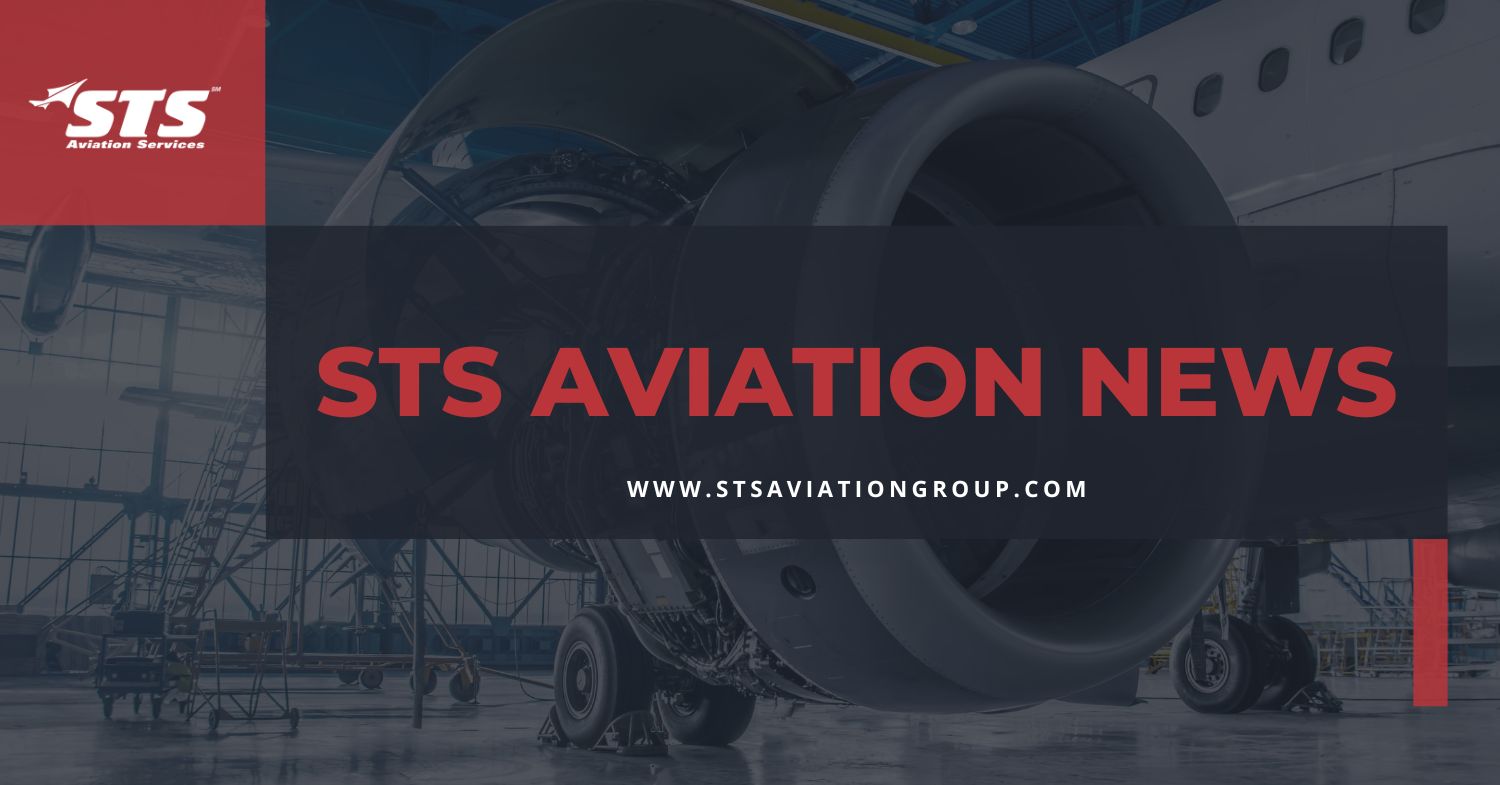
That’s why we are excited to talk about a partnership that brings together two companies who care deeply about the little things. STS Component Solutions has joined forces with Perkins Aircraft Windows to deliver Embraer 170 and 190 side cockpit windows that operators can trust.

Perkins has built a reputation for precision and for making windows that stand the test of time. Their PMA approved solutions are more than just replacements for OEM parts. They are proof that performance and cost efficiency can live side by side. For airlines and operators, that means less time worrying about availability or budgets and more time focused on keeping their fleets flying.

And here is where STS comes in. Our role is to ensure that the value Perkins creates does not sit on a shelf. Through our global distribution network and 24/7 support, we make sure these windows reach the operators who need them, when they need them. Together, we are creating a solution that blends expertise with accessibility.

The benefits are clear. Cost savings without compromise. Availability without delay. Support without limits of time or geography. For our customers, it is about knowing they have a partner who understands both the urgency and the complexity of aviation maintenance.

In an industry that never stops moving, clarity matters. Not just in the glass that frames a pilot’s view, but in the confidence operators have when choosing their supply chain partners. With Perkins and STS working together, that clarity is something you can count on.

Discover the full scope of STS Component Solutions’ OEM partnerships. Download our OEM Product Line Card for detailed insights or explore our digital landing page to see how we support operators worldwide.

The Ultimate Guide to Becoming an FAA Certified Aircraft Mechanic in the United States

STS Line Maintenance Achieves Seventh Consecutive FAA Diamond Award for Excellence in Safety & Training

A Shortage Creates an Opportunity

Aviation has always been about more than airplanes. It is about people. Behind every safe flight and every passenger who steps off an aircraft without a second thought is a team of highly skilled technicians who keep that machine airworthy.

Right now, the industry is facing a problem that is both urgent and unprecedented. Airlines and MROs across the United States are dealing with a severe shortage of certified aircraft mechanics. Thousands of experienced professionals are approaching retirement age, and not enough young people are stepping in to fill their shoes.

For the industry, that reality is a challenge. For today’s youth, it is an opportunity.

If you have ever thought about a career where your hands, your mind, and your skillset make a direct impact on safety, reliability, and progress, becoming an aircraft mechanic may be the answer. Unlike many other professions, you do not need a four-year degree to get started. What you do need is determination, training, and a willingness to take on responsibility that truly matters.

What Does It Mean to Be an FAA Certified Mechanic?

In the United States, the Federal Aviation Administration regulates who can and cannot work on aircraft. The FAA issues two types of maintenance certificates:

  • Airframe (A): Covers the structure of the aircraft, including fuselage, wings, landing gear, hydraulics, and environmental systems.
  • Powerplant (P): Focuses on engines, fuel systems, and everything that keeps aircraft power running smoothly.

Many mechanics pursue both certifications, which together are commonly referred to as an A&P license. With an A&P license, you are cleared to perform, supervise, and sign off on a wide range of maintenance tasks critical to flight safety.

If you are curious, the FAA outlines the certification process in detail on its official Airframe and Powerplant Mechanic Certification page.

Step One: Choose Your Training Path

There are two primary routes to becoming an FAA certified mechanic.

1. FAA Approved Part 147 School

An FAA-approved Part 147 program is the most direct option. These schools provide both classroom learning and hands-on shop training. Most programs take 18 to 24 months to complete, after which graduates are eligible to sit for their FAA exams. Many schools also maintain strong partnerships with airlines and maintenance companies, which can make job placement easier. You can search for approved programs on the FAA’s Part 147 School Locator.

2. On-the-Job Experience

If formal schooling is not the right fit, you can qualify through experience. The FAA allows candidates to substitute real-world work for classroom hours. The requirement is 30 months of practical experience if you want both airframe and powerplant certifications, or 18 months for just one. Many military veterans who worked in aviation maintenance use this path to transition into civilian aviation careers.

Step Two: Pass the FAA Exams

Once training or experience requirements are complete, the next step is testing. To earn certification, mechanics must pass three sets of exams for each rating:

  • Written Knowledge Test: A multiple-choice exam that measures understanding of regulations, systems, and principles.
  • Oral Test: A face-to-face evaluation with an FAA-designated examiner.
  • Practical Test: A hands-on demonstration of maintenance skills on real equipment.

It is not just about knowing the material. It is about proving that you can apply it safely, accurately, and consistently.

Step Three: Start Your Career

With your FAA certification, you will find opportunities across the aviation industry. Certified mechanics are in demand at commercial airlines, maintenance repair organizations (MROs), private jet operators, cargo carriers, and government agencies.

Entry-level roles might include:

  • Line Maintenance Technician
  • Base Maintenance Technician
  • Avionics Specialist (with additional training)
  • Engine or Component Shop Mechanic

And because the shortage of skilled mechanics is projected to grow, these jobs often come with competitive pay, strong benefits, and clear advancement opportunities.

Why Becoming an Aircraft Mechanic Matters

Being an aircraft mechanic is not just another job. It is a responsibility. Every inspection you complete, every repair you sign off on, and every decision you make carries weight. Lives depend on it. That responsibility can feel heavy, but it is also deeply rewarding.

The industry needs the next generation to step forward. If you are someone who thrives on solving problems, working with your hands, and being part of something bigger than yourself, this is your moment. Aviation will always need mechanics. Planes will always need to fly. And with an FAA certificate in your pocket, you can be the one who makes it possible.

Ready to learn more? Start exploring schools near you, talk to veterans of the trade, or dive into the FAA’s official resources. A career as an aircraft mechanic is more than a job. It is a calling. And right now, the aviation industry is calling loudly.

More in this series: The Ultimate Guide to Becoming a Commercial Airline Pilot

Strengthening Leadership Across Service Engineering

STS Aviation Group Announces Key Leadership Promotions in Service Engineering

STS Aviation Group is proud to announce several key leadership changes within its Service Engineering division… changes that reflect both the growth of our business and the commitment of our people. Each promotion underscores a simple truth: the future of aviation is built on the shoulders of dedicated engineers who lead with vision, discipline, and care.

Amber North: Sr. Manager, Service Engineering – AOG Services

Few areas in aviation demand more precision than AOG support. Aircraft on Ground events move fast, and operators need white-glove service without compromise. To meet this demand, Amber North has been promoted to Sr. Manager, Service Engineering – AOG Services. Amber’s proven leadership and relentless focus on customer success make her the ideal choice to expand oversight of our AOG operations across all ATAs. She will lead deployment of road teams, maintain a global 24/7 schedule, and ensure operator-specific needs are not just met, but anticipated.

New Leadership Roles: Building Depth and Focus

To ensure strength across every core service area, two new management roles have been established:

  • Arturo Romero – Manager, Service Engineering – Damage Tolerance
    Arturo has long been at the forefront of our Damage Tolerance initiatives, managing DERs and DTE staff through complex requests and AMOCs. Now, in a formal management capacity, he will continue this work while also overseeing the design and development of new analysis tools — innovations that expand both the efficiency and scope of STS engineering.
  • Lael Gobble – Manager, Service Engineering – Heavy Maintenance
    Heavy maintenance programs require steady leadership and clear coordination. Lael will oversee all remote engineering support in this space, ensuring that quality and efficiency remain uncompromised. His focus on training initiatives will ensure that major and minor repairs stay on schedule, creating a clear line of separation from the fast-paced demands of AOG services.

Both Arturo and Lael move forward from Principal Engineer to Manager, marking not only their personal growth but also STS Aviation Group’s commitment to developing leadership from within.

Recognizing Excellence in Melbourne, Florida

At our MRO in Melbourne, Florida, two additional promotions highlight the strength of our engineering talent:

  • Joshua Greer has been promoted from Senior Engineer to Principal Engineer, reflecting his role as a mentor, trainer, and solutions-driven leader on-site.
  • Thomas Townley has advanced from Associate Engineer to Engineer, a recognition of his strong technical performance and growing expertise after just one year with the team.

Investing in People, Driving the Future

These leadership changes represent more than titles. They reflect STS Aviation Group’s commitment to investing in its people, scaling for growth, and strengthening the operational backbone that supports our customers worldwide.

Congratulations to Amber, Arturo, Lael, Joshua, and Thomas. Their leadership will help guide STS Aviation Group into its next chapter of growth and excellence.

Eddie O’Dwyer Promoted to Vice President of Business Development at GT Engine Services, an STS Aviation Group Company

Eddie O’Dwyer Promoted to Vice President of Business Development at GT Engine Services, an STS Aviation Group Company

STANSTED, United Kingdom, 28 July 2025 GT Engine Services, an STS Aviation Group company, has announced the promotion of Eddie O’Dwyer to Vice President of Business Development, effective August 1, 2025.

O’Dwyer joined GT Engine Services in 2020 as General Manager. He was promoted to Technical Director in 2021, then to Chief Commercial Officer in 2024. Across each role, he has played a key part in advancing the company’s technical capability, commercial strategy, and customer relationships.

Commenting on his promotion, O’Dwyer said, “This business has grown a great deal over the past few years, and it’s been a privilege to be part of that journey. I look forward to the next chapter and to continuing our work with partners around the world who count on us for responsive, high-quality support.”

Mark Smith, President of STS Aviation Group, added, “Eddie has been instrumental in driving GT Engine Services’ growth. His technical grounding, commercial insight, and commitment to customer delivery make him an ideal fit for this position and an important part of our wider strategy.”

For more information about GT Engine Services and its global capabilities, visit: https://www.gtes.aero/.

About STS Aviation Group:

STS Aviation Group is a global provider of aircraft maintenance, engineering, staffing, and material solutions. Headquartered in Jensen Beach, Florida, and operating facilities worldwide, STS supports commercial and military operators through tailored services that keep aircraft flying safely and efficiently.

Media Contact:

Bryan Shaw
Director of Marketing
STS Aviation Group
1-800-800-2400 ext. 8521
[email protected]
www.stsaviationgroup.com

Freedom Looks Good From Up Here

American flag waving near aircraft hangar during Fourth of July celebration (2)

Independence Day means a lot of things to a lot of people. Fireworks. Grilled hot dogs. Time off. Family on the beach. Flags in the yard. But underneath all of that is a feeling. A belief that you can go where you want, build what you want, and live life on your own terms.

In aviation, we know that feeling well.

Flight is freedom. Always has been. The freedom to move. To connect. To rise. At STS Aviation Group, we don’t just believe in that idea, we live it. Every aircraft we service. Every part we deliver. Every team we support. It’s all part of a bigger story about pushing forward, lifting off, and keeping people in the air.

And while aviation doesn’t have an official seat at the Fourth of July table, we’d argue it deserves one.

Because when those fighter jets rip through the sky at parades and ballgames, when families reunite at airports, when service members fly home for the first time in months, aviation is right there. Working quietly behind the scenes. Making the moment possible.

So this Fourth, while you’re watching the sky light up in red, white, and blue, know that some of our people are working too. In hangars. On ramps. In line stations across the world. Keeping aircraft moving. Keeping freedom in motion.

Happy Fourth of July from all of us at STS Aviation Group. Freedom looks good from up here!

STS Aviation Services Secures CAA Approval to Expand Part 21J Design Capabilities

STS Aviation News

MANCHESTER, United Kingdom (June 12, 2025) — STS Aviation Services (STS), a leading provider of nose-to-tail MRO solutions, has earned expanded approval under its CAA Part 21J Design Organisation Approval (DOA), unlocking new capabilities for turbine engine component repairs and modifications.

The approval marks a strategic step forward for STS’ UK-based design team, now authorised to develop and certify Minor Modifications and Minor Repairs on turbine engine nacelles, including air intake cowls, fan cowls, thrust reversers, and core cowls. The enhanced scope covers:

  • Minor repairs and unrepaired damage approvals on metallic and composite secondary structures
  • Modifications to existing structures, including replacement part design and installation
  • Protective treatments such as corrosion-inhibiting compounds, sealants, and coatings
  • Design and installation of aircraft liveries, placards, and exterior markings

“Our team has worked diligently to secure this approval, further reflecting our technical expertise and our commitment to delivering high-value engineering services to our clients,” said Ethan Steele, EVP & Head of Commercial at STS Aviation Services. “Every new approval expands our ability to engineer real-world solutions.  We can better meet the needs of our airline and leasing customers faster, offering the safest most reliable options to reduce their operational disruptions.”

The new scope complements STS’ existing 21J capabilities, reinforcing the company’s commitment to offering agile, in-house engineering expertise across both airframe and engine systems. With this expansion, STS Aviation Services strengthens its position as one of the industry’s most comprehensive and responsive MRO providers, with design solutions that move at the speed of operations.

For operators facing AOG events, short lease transitions, or mid-life modification needs, the ability to self-certify structural and component repairs, quickly and compliantly, can make all the difference. This approval ensures STS can now deliver even more of those services under one roof.

To learn more about STS Aviation Services and its growing portfolio of CAA and EASA-approved engineering solutions, visit www.stsaviationgroup.com.

About STS Aviation Services

STS Aviation Services is the MRO division of STS Aviation Group, delivering nose-to-tail aircraft maintenance solutions to commercial and military operators worldwide. With state-of-the-art facilities across the globe, our team handles everything from line and base maintenance to complex structural repairs, modifications, and engineering programs. Backed by decades of experience and driven by a forward-thinking approach, STS Aviation Services is committed to keeping aircraft flying and operations running at full speed.

Media Contact

Bryan Shaw
Director of Marketing
STS Aviation Group
1-800-800-2400 ext. 8521
[email protected]
www.stsaviationgroup.com

STS Aviation Group Announces Leadership Promotions

STS Aviation Group Announces Leadership Promotions

JENSEN BEACH, Florida (April 7, 2025) — What defines great leadership? Is it the ability to inspire teams, drive results, or turn ambitious visions into reality? At STS Aviation Group (STS), we believe it’s all these things and more. That’s why we are excited to announce the promotions of Ethan Steele to Executive Vice President, Head of Commercial, and Shane King to President of STS Aviation Services, effective immediately.

Steele will report to STS Aviation Group’s CEO, PJ Anson, while King will report to Mark Smith, President of STS Aviation Group, ensuring leadership continuity as the company accelerates its global growth strategy.

Ethan Steele: Driving Global Commercial Strategy

In his expanded role, Steele will oversee all commercial operations for STS, focusing on customer partnerships, market expansion, and strategic growth. A 25-year veteran of the company, he most recently led STS Engineering Solutions, transforming it into a premier aerospace engineering provider.

“I’m honored and excited for this opportunity,” said Steele. “We have an incredible team and world-class clients. My goal is to build even stronger relationships, drive innovation, and continue pushing STS Aviation Group to new heights.”

Shane King: Leading Global MRO Operations

As President of STS Aviation Services, King will oversee MRO operations across the Americas, Europe, and the Middle East, ensuring continued growth and operational excellence. He has been instrumental in managing STS Aviation Services throughout the Americas, demonstrating exceptional leadership.

“I’m grateful for this opportunity and excited to lead our global Aviation Services team,” said King. “With our talented staff, strong customer partnerships, and expanding global capabilities, we are well-positioned for the future. I look forward to building on our successes.”

Positioning STS Aviation Group for the Future

These promotions come as STS Aviation Group continues its global expansion, driven by a strategic investment from H.I.G. Capital, the Boeing E-7 program expansion in Birmingham, United Kingdom, and the acquisition of GT Engine Services.

For more information about STS Aviation Group, visit www.stsaviationgroup.com or call 1-800-800-2400.

About STS Aviation Group

Founded in 1984, STS Aviation Group is a premier global provider of aviation solutions, delivering comprehensive aircraft maintenance, repair, and overhaul services with unmatched expertise. Headquartered in Jensen Beach, Florida, and operating facilities worldwide, STS specializes in tailored maintenance, engineering solutions, workforce management, and material services, ensuring safe and efficient operations for commercial and military aviation clients worldwide.

Media Contact:

Bryan Shaw
Director of Marketing
STS Aviation Group
1-800-800-2400 ext. 8521
[email protected]
www.stsaviationgroup.com

A Thanksgiving Tribute from STS Aviation Group

A Thanksgiving Tribute from STS Aviation Group

As we gather this Thanksgiving, we want to take a moment to celebrate the people and experiences that make our journey worthwhile. To our employees, partners, clients, and friends — you are the backbone of our success, and we are deeply grateful for your unwavering support.

This year has been one of growth, triumph, and challenges. As we reflect on what we’re most thankful for, here are a few things that stand out.

Our Competition

Thank you for keeping us sharp and fueling our drive to innovate. You challenge us to think creatively, adapt quickly, and push the boundaries of what’s possible. Even when the rivalry gets tough, you remind us that complacency is never an option.

The Challenges We’ve Faced

Adversity has been a powerful teacher. Thank you for forcing us to think differently and rise to the occasion. Through you, we’ve learned resilience, creativity, and the true meaning of teamwork. Challenges may test us, but they also strengthen us.

The Small Wins

Every tiny step forward fuels our momentum. These small victories remind us that progress, no matter how incremental, is worth celebrating. Thank you for keeping our team motivated and showing us that big achievements are built on many smaller ones.

Our Incredible Team

To the quirky, passionate, and inspiring individuals who make up the STS family—thank you for being the heart of who we are. Your unique perspectives and boundless energy create a workplace that is more than just a job. You bring joy, laughter, and camaraderie to everything we do, and we wouldn’t have it any other way.

Our Leadership

Thank you for leading with empathy, vision, and a commitment to excellence. You empower us to succeed, support us through challenges, and remind us that success is about more than just results. Your guidance and belief in us inspire greatness every day.

Final Reflections

This Thanksgiving, we encourage everyone to pause and reflect on the moments and people that bring meaning to your life. Embrace challenges as opportunities to grow. Celebrate every win, big or small. And, most importantly, cherish the relationships that make it all worthwhile.

From all of us at STS Aviation Group, Happy Thanksgiving. Here’s to gratitude, growth, and the road ahead.

Top 10 Best Airports in the World: A Traveler’s Perspective

Top 10 Best Airports in the World A Traveler's Perspective

As the Chief Marketing Officer for STS Aviation Group, travel is more than a necessity, it’s a lifestyle. I’ve spent countless hours in airports across the globe, navigating terminals, testing lounges, and witnessing the incredible diversity in how airports operate. I’ve seen the best (and occasionally the worst), but some airports stand out for their ability to transform the travel experience from a mundane necessity into something memorable.

What follows isn’t just a list of the world’s best airports. It’s a personal account of the moments, experiences, and facilities that made these airports truly exceptional.

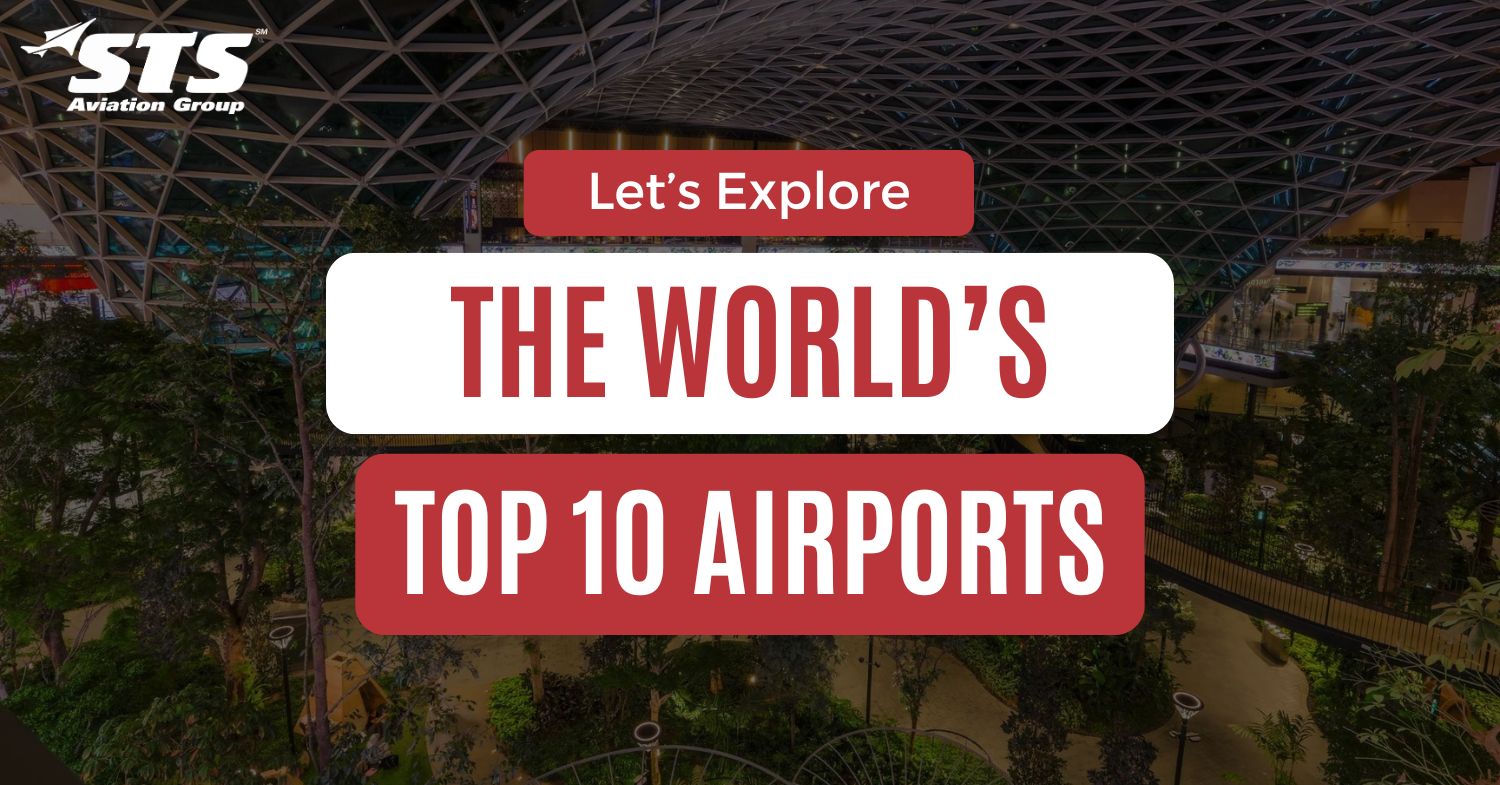
1. Hamad International Airport (DOH) – Doha, Qatar

When I first stepped into Hamad International Airport, it felt more like entering a five-star resort than an airport. The sheer scale and opulence are jaw-dropping. “The Orchard,” their tropical garden, became my sanctuary during an extended layover. Walking through lush greenery under natural light, I almost forgot I was in transit. Their Wellbeing and Fitness Centre, complete with a pool and spa, helped me shake off the travel fatigue, leaving me refreshed for my next flight.

2. Singapore Changi Airport (SIN) – Singapore

I once had a 10-hour layover at Changi, and it turned out to be a highlight of my trip. I explored the butterfly garden and marveled at the Jewel’s Rain Vortex. But the moment that truly sold me? Watching families interact in their free-to-use movie theater and the rooftop swimming pool. Changi isn’t just an airport, it’s an experience.

3. Incheon International Airport (ICN) – Seoul, South Korea

Incheon surprised me with how much it offers. On one visit, I found myself watching a cultural dance performance before checking out their ice-skating rink (yes, they have one). It’s also the most family-friendly airport I’ve encountered. Their toddler rest zones and nursing rooms make traveling with kids manageable, a huge win for parents.

4. Tokyo Haneda Airport (HND) – Tokyo, Japan

Haneda is where efficiency meets culture. It’s one of the cleanest airports I’ve visited, and their punctuality is unmatched. During a layover, I grabbed a quick but delicious bowl of ramen at one of their many eateries. The ease of navigating Haneda makes it a favorite for both leisure and business travel.

5. Istanbul Airport (IST) – Istanbul, Turkey

The first time I arrived at Istanbul Airport, I was struck by its sheer grandeur. It’s massive yet surprisingly easy to navigate. Their museum featuring Turkish artifacts offered a dose of culture I wasn’t expecting, and their lounges rival the best hotels. For me, it’s the balance of luxury and functionality that makes Istanbul Airport shine.

6. Dubai International Airport (DXB) – Dubai, UAE

Dubai’s Terminal 3 is a city unto itself. During one visit, I wandered through their sprawling duty-free area, buying gifts for my family before indulging in a multi-course meal at a Michelin-rated restaurant. The mix of retail therapy and top-tier dining is why I always look forward to DXB.

7. Munich Airport (MUC) – Munich, Germany

On a crisp winter evening, I found myself at Munich Airport’s outdoor ice-skating rink. It was a surreal moment, skating under festive lights in the middle of an airport. Pair that with their in-house brewery, and Munich Airport feels less like a layover and more like a Bavarian vacation.

8. Zurich Airport (ZRH) – Zurich, Switzerland

Zurich Airport embodies Swiss precision. What impressed me most was their bike rental service, which allowed me to explore the surrounding area during a long layover. It’s these small touches of thoughtfulness that set Zurich apart.

9. Kansai International Airport (KIX) – Osaka, Japan

Arriving at Kansai feels like stepping onto a futuristic island, it’s literally built on one. On my first visit, I was captivated by its design and the nearby Ferris wheel. The convenience of having hotels and shopping malls right by the terminal made it incredibly traveler-friendly.

10. Hong Kong International Airport (HKG) – Hong Kong

Hong Kong’s airport has always been a personal favorite. On one memorable trip, I caught a movie at their IMAX theater before indulging in dim sum at a top-notch restaurant. The efficiency with which they handle one of the world’s busiest airports is something I deeply admire.

So, Which is the Best?

As someone who practically lives in airports, this list is my ode to the best of the best. Each airport excels in its own way; Hamad for luxury, Changi for experiences, and Haneda for efficiency. But if you’re asking which one is easiest to service? My industry connections tell me Tokyo Haneda’s stellar operations and streamlined facilities make it a dream for MRO professionals.

Ultimately, the “best” airport depends on what you value most as a traveler; comfort, culture, or convenience. But one thing is certain. These airports redefine what it means to take to the skies.

Comparing the Boeing 787, Airbus A350, 737 MAX, and A320neo: Which is Best?

Comparing the Boeing 787, Airbus A350, 737 MAX, and A320neo Which is Best (1)

When it comes to commercial aviation, a few standout aircraft dominate the skies. The Boeing 787 Dreamliner, Airbus A350, Boeing 737 MAX, and Airbus A320neo are some of the most popular and widely flown aircraft today. But which one offers the best flying experience? And for maintenance crews, which is the easiest to service?

Let’s dive deep into the details.

Boeing 787 Dreamliner

Overview:

The Boeing 787 Dreamliner revolutionized long-haul travel when it entered service in 2011. Its focus on fuel efficiency and passenger comfort has made it a favorite for airlines and travelers alike.

Key Specs:

  • Seats: 242–336 (depending on configuration)
  • Range: 7,305–8,786 nautical miles
  • Cruising Speed: Mach 0.85 (561 mph)
  • Major Operators: United Airlines, Qatar Airways, British Airways, ANA

Features:

The 787 Dreamliner boasts cutting-edge technology, including advanced composite materials that make up 50% of the aircraft’s structure. This reduces weight and improves fuel efficiency by up to 20%. Passengers love the larger windows, higher cabin humidity, and smoother ride, thanks to active turbulence dampening systems.

Maintenance Insights:

While the composite materials reduce corrosion concerns, they require specialized knowledge and equipment for repairs. However, its advanced health monitoring systems make diagnosing issues faster and more accurate.

Verdict:

  • Best for Passengers? Yes, especially for long-haul routes.
  • Easiest to Service? Moderately challenging due to its advanced technology.

Airbus A350

Overview:

Often compared to the Dreamliner, the Airbus A350 entered service in 2015 and is Airbus’s flagship long-haul aircraft, offering state-of-the-art comfort and efficiency.

Key Specs:

  • Seats: 300–410 (depending on variant)
  • Range: 8,000–9,700 nautical miles
  • Cruising Speed: Mach 0.85 (561 mph)
  • Major Operators: Singapore Airlines, Delta Air Lines, Lufthansa, Qatar Airways

Features:

The A350’s cabin is designed with passenger comfort in mind, featuring quieter interiors, LED mood lighting, and a wider fuselage that allows for more spacious seating. Its advanced Rolls-Royce Trent XWB engines deliver unparalleled efficiency.

Maintenance Insights:

The A350’s health monitoring and predictive maintenance systems are highly advanced, reducing downtime for repairs. However, like the Dreamliner, its composite materials can pose challenges for traditional repair techniques.

Verdict:

  • Best for Passengers? Yes, especially for ultra-long-haul routes.
  • Easiest to Service? Similar to the 787, with moderate challenges due to its cutting-edge design.

Boeing 737 MAX

Overview:

The Boeing 737 MAX is the newest iteration of the iconic 737 series and is designed for short- to medium-haul flights. It re-entered service in 2020 after undergoing significant safety improvements.

Key Specs:

  • Seats: 138–204 (depending on variant)
  • Range: 3,300–3,850 nautical miles
  • Cruising Speed: Mach 0.79 (523 mph)
  • Major Operators: Southwest Airlines, Ryanair, United Airlines, Air Canada

Features:

The 737 MAX offers improved fuel efficiency thanks to its CFM LEAP-1B engines and aerodynamic winglets. Airlines appreciate its lower operating costs, while passengers enjoy quieter cabins and larger overhead bins.

Maintenance Insights:

The 737 MAX is built on the familiar 737 platform, making it easier for maintenance crews already trained on previous models. Its smaller size and simpler systems make it one of the easier aircraft to service.

Verdict:

  • Best for Passengers? Great for short- to medium-haul flights.
  • Easiest to Service? Yes, thanks to its familiarity and straightforward design.

Airbus A320neo

Overview:

The A320neo is Airbus’s response to the 737 MAX and is designed for similar short- to medium-haul operations. Its “neo” designation stands for “new engine option,” which improves efficiency and reduces emissions.

Key Specs:

  • Seats: 140–240 (depending on variant)
  • Range: 3,500–4,000 nautical miles
  • Cruising Speed: Mach 0.78 (511 mph)
  • Major Operators: American Airlines, Indigo, Lufthansa, JetBlue

Features:

The A320neo is equipped with quieter, more fuel-efficient engines (either Pratt & Whitney PW1000G or CFM LEAP-1A) and larger wingtip devices called sharklets. These upgrades result in a 15-20% improvement in fuel efficiency compared to older A320 models.

Maintenance Insights:

Much like the 737 MAX, the A320neo benefits from familiarity, as it is an upgrade of the existing A320 family. Its maintenance requirements are straightforward, and its systems are widely understood by MRO teams.

Verdict:

  • Best for Passengers? Great for regional and short-haul flights.
  • Easiest to Service? Yes, due to its evolutionary design.

Which Aircraft is the Best?

For Passengers:

  • For long-haul comfort: The Boeing 787 Dreamliner and Airbus A350 are tied for best-in-class features like larger windows, quieter cabins, and advanced air quality systems.
  • For short-haul efficiency: The Boeing 737 MAX and Airbus A320neo are both excellent options, but the A320neo edges out slightly with its quieter engines and slightly roomier feel.

For Maintenance Crews:

  • The Boeing 737 MAX and Airbus A320neo are the clear winners. Their familiar designs and straightforward systems make them easier to service, saving time and reducing downtime for operators.

Prepare for Takeoff

Each of these aircraft excels in specific areas, catering to both passengers and airlines with unique benefits. From the technological marvels of the Dreamliner and A350 to the cost-efficient reliability of the 737 MAX and A320neo, these planes represent the pinnacle of modern aviation.

At STS Aviation Group, we’re proud to support these incredible aircraft with industry-leading MRO services, ensuring they remain safe, reliable, and ready to fly. Whether you’re looking for routine maintenance or urgent AOG support, our global network of experts is here to help.

Contact us today to learn more about how STS Aviation Group keeps the world flying!